
Maggie Harlow
4 Steps to Prioritizing Sign Projects
The four-square matrix solves other sign business problems, too.

EVERY SIGNSHOP, NO matter its situation, faces the similar dilemma of “how do I prioritize the projects we focus on and quote?” Signshops are contacted about every kind of imaginable project, from simple decals and banners to massive custom products and multi-location rebrand challenges.
The gamut is dizzying.
Equally dizzying is the wild diversity of customers that contact a signshop: those wanting a banner for a birthday party to corporate marketing executives seeking a long-term solution to their branding needs.
What I offer to all of you is a simple four-square matrix that can help you and your team identify, then capture the clients you want the most. In addition, this tool can help you de-prioritize those projects and clients that you want less of.
It is up to you to decide what criteria to consider when you evaluate projects and customers, so if you aren’t sure, you may have to spend some time thinking about it! Sometimes sales teams get lost in just trying to handle all the opportunities instead of focusing on the ones that matter most to you.
Advertisement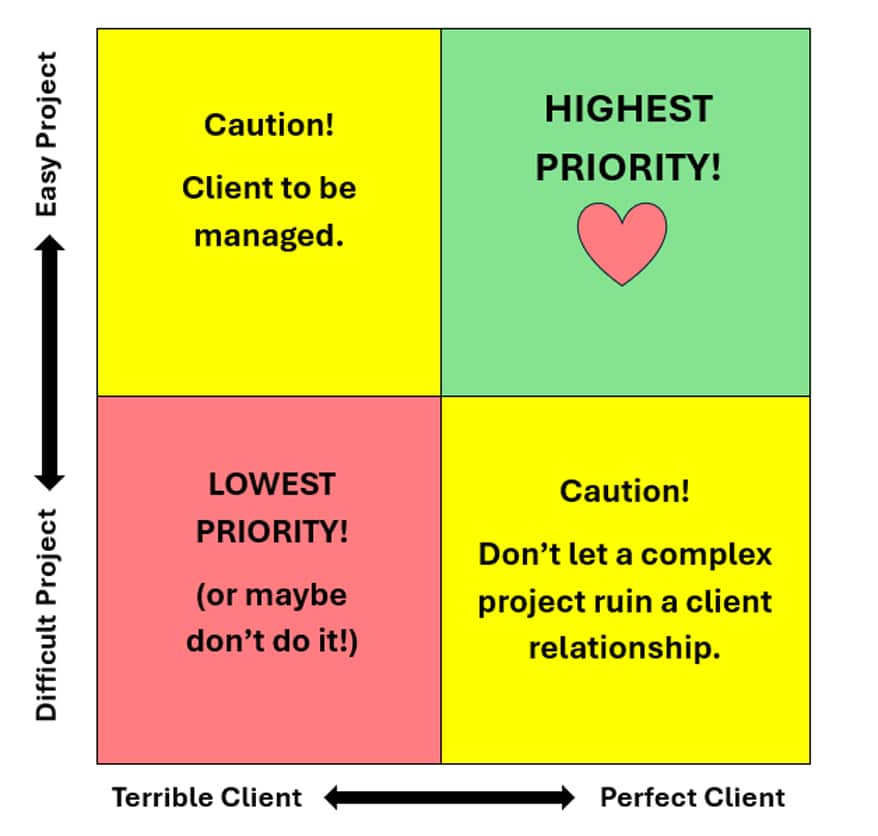
This matrix can help you sort many other competing priorities, too: “Impactful” problems in the company against “Difficulty” to address, or “Urgent” issues against “Important” issues.
- Step One: Sit down and consider all the qualities you would consider in evaluating clients and projects. Be honest about what you are good at as a company, and what clients you seem to handle easily. What do you love working on? What is most profitable? What is easiest for your team to handle? (Examples: We love fast-turn digital print as a priority, and electrical signs are a lower priority.)
- Step Two: Evaluate how certain clients or projects land on this matrix. Are they at the top of the chart as a “perfect client?” Is the project request middle of the road difficult? Use the chart to land clients and projects in combination. The green matrix box marks your ideal clients and ideal projects. (Examples: Prioritize clients who love our work and are easy to work with over clients we have never worked with or who are notoriously unrealistic.)
- Step Three: Teach your team about your thinking. Share the matrix, answer questions, and be open to debate and discussion. A customer I think is “difficult” may not be difficult to them. Create a dialogue on this topic and help your team achieve clarity on what to prioritize, and why.
- Step Four: Spend time with your sales team each day looking at the opportunities that came in the previous day. Once you have practice, you can easily use the matrix to train your team on how to identify the best clients and the best project types, and give those the highest priority. Some projects might not be a fit for the company, so decide how to either turn them away or deal with them.
Some of you may say, “I can’t afford to turn away any project.” To that I would argue, “Are you certain?” If you let yourself get too busy handling “less than ideal” clients or projects, you might not have time for the ideal clients when they show up.
I’m a fan of challenging myself with new products and clients, but doing it with clarity is the best path for success. Profit is the goal, not bragging rights that you pulled off something amazing at a low profit.
The more you develop clarity and vision around your ideal clients and ideal projects, the easier they will be to identify and draw in.
AdvertisementSecrets of Lead Generation
Boost your sales by generating more leads! In this light and lively webinar featuring Maggie Harlow, CEO of Signarama Louisville Downtown (Louisville, KY) and the “Business of Signs” columnist for Signs of the Times, learn the secrets of how leads are generated, where they come from and how you can cultivate better (not just more) leads.










Bulletins
Get the most important news and business ideas from Signs of the Times magazine's news bulletin.
-

 News4 days ago
2026 Sign Contest Open for Submission
-

 Russell Toynes7 days ago
Is AI Coming for Sign Designers?
-

 Monument Signs6 days ago
Monument Signs With No Foundation
-

 Real Deal7 days ago
One Signshop’s Installers Approach Another Shop
-

 Photo Gallery6 days ago
14 Looks at Foundationless Monument Signs
-

 Video5 days ago
Paid Day Off to Find Another Job
-

 Benchmarks3 days ago
5 Industry-Changing Historic Signs and Techniques
-

 Product Buying + Technology2 weeks ago
Digital Sign Displays and EMCs