Jameson Parker
Sign Manufacturing Bottlenecks
The persistent enemy of throughput.

EVERY PRODUCTION SHOP is unique and so too are the results of their labor. Signshops, though competing for similar work, all have their own way of building products. These modus operandi are all influenced by experience, availability of materials, shop capability and employee skill levels. This can mean that bottlenecks which arise in a shop can be just as personalized as the processes they affect.
Although in many cases a specialized solution will be necessary, general guidelines and understanding of these unwanted barriers to production can help in the problem-solving process. In this column I intend to explain what bottlenecks are, discuss the different types that can occur, and propose solutions that can help your systematic approach to rooting out the cause of inefficiencies on your production floor.
Process Bottlenecks
To put it simply, the word “bottleneck” refers to an area that narrows and in turn restricts flow. In the manufacturing setting, it is a process or lack of supply that causes the overall flow of goods to slow. One must understand that technically all shops will have at least one bottleneck because the term also refers to your slowest process. There are two main types of bottlenecks and within them, several subtypes that are important to understand. Mainly, they can be thought of as pertaining to a specific process or to the supply chain.
A process bottleneck refers to a process in your shop that slows down some or all of your end products. Within this category there are sub types of short-term and long-term bottlenecks. It is important to distinguish between these two when it comes to deciding if action is required for correction. You must also take into account if your process is defined as a stable dynamic or an unstable dynamic. As it pertains to the sign industry, a stable dynamic process refers to a high-volume wholesale shop that produces signs at quantity in batch runs, and an unstable dynamic process refers to custom signshops that focus on individual signs and are not set up for true large-batch production.
Advertisement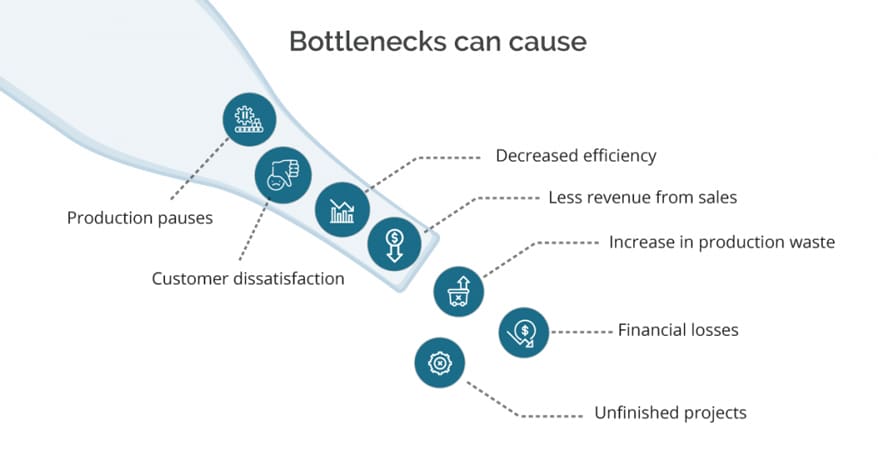
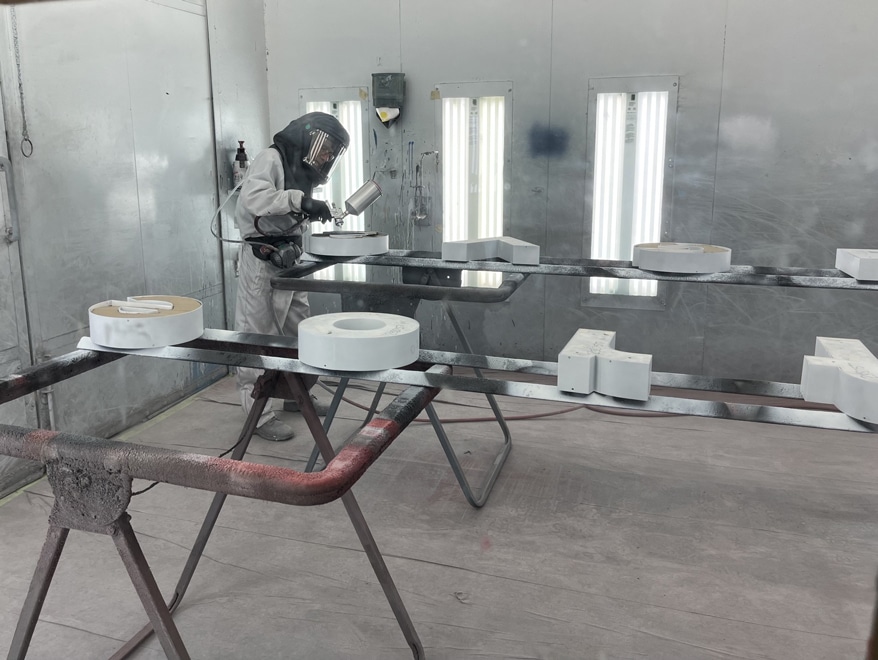
At North American Signs, our processes would be considered unstable dynamic as we consistently produce custom and small-batch work. As it is with many shops, our regular bottleneck is the paint department. Finishing work, whether it is painting, powder-coating, anodizing or finish-scoring, normally ends up being the bottleneck in various manufacturing environments. Although finishing is a common slow spot, the solutions are generally unique, and the type of process and the product you produce will determine which remedy will work best for you.
Another factor that must be taken into consideration is moving bottlenecks. We recently had an example of this in our shop in which a custom run of letter sets took more time to fabricate and assemble than it did to paint them. This was a rare occurrence where for a few months we had a temporary shift in bottlenecks from the paint department to the fab department. This is where the consideration of short-term and long-term categories can be important to dictate which solution, if any, you are going to implement.
Supply Chain Bottlenecks
Supply chain bottlenecks have to do with external stresses that are outside of your control but can still be compensated for. A recent example of a major supply chain bottleneck occurred in 2021 and 2022 in the form of a semiconductor-chip shortage, which ground the auto industry to a halt. An already overburdened supply chain fell victim to a short-term bottleneck born from the Covid pandemic.
In 2025 this issue has since been resolved, but it required a lot of work from the automakers to adapt their processes to a limited supply of chips. In the same way, the sign industry was affected when paint supply, specifically black and white, ran short during the pandemic years. At North American Signs we were hit by this supply chain bottleneck, but we chose to use the redesign solution and got creative with what mixtures we used, where we acquired paint, and how we leaned on smaller suppliers to explore long-forgotten sources for paint supplies. Later, I will explain more about redesign as well as the two other solution paths for the alleviation of bottlenecks.
Is It Actually a Bottleneck?
We must always remember a conclusion hastily formed is most often wrong. Just because you have a slow process does not mean a bottleneck is to blame. You must remember alternative causes include equipment issues, lack of standards, poor documentation, lack of skilled labor, etc.
Solutions: Redesign, Replace or Remove
- If you have determined there is a bottleneck in your process or supply chain that is long term and affecting your throughput, it is time to craft a solution. To determine a viable action plan, you must first consider which of the three R’s you wish to apply. These are redesign, replace, or remove.
- To redesign a process means you have determined it is irreplaceable in your shop, and it must be changed in order to make it more efficient. An example of this could be adding a new piece of equipment to a department or removing an outdated one to help deal with the workload.
- To replace means you have determined a more efficient process can take the place of your bottlenecked process and improve your throughput. An example of this would be changing from painting to powder-coat finishing.
- Finally, to remove means you have determined the slow process is no longer needed and can be scrapped all together. This is uncommon, but can still happen, and when the unneeded process is removed, the results are very noticeable.

Secrets of Lead Generation
Boost your sales by generating more leads! In this light and lively webinar featuring Maggie Harlow, CEO of Signarama Louisville Downtown (Louisville, KY) and the “Business of Signs” columnist for Signs of the Times, learn the secrets of how leads are generated, where they come from and how you can cultivate better (not just more) leads.




Bulletins
Get the most important news and business ideas from Signs of the Times magazine's news bulletin.
-

 Big Survey2 weeks ago
How Much Are Sign Companies Charging in 2026?
-
 Photo Gallery1 week ago
125 Years of Federal Heath in 16 Images
-

 News1 week ago
Federal Heath Sign Co. Celebrates 125 Years
-

 News5 days ago
LC Sign Launches The Touchpoint Initiative
-

 Heidi Tillmanns4 days ago
Sign Designers Should Plan Like Builders
-

 Editor's Note6 days ago
Follow the Signs to the 2026 Big Survey
-

 Dale Salamacha2 days ago
Dale’s Signshop Plays to Strength With Top Customer
-
 News1 week ago
Chicago’s Foremost Liquors Sign Removed