SEVERAL WEEKS AGO, I was walking the floor at the ISA International Sign Expo 2026 in Orlando, and if you closed your eyes for a second, the sounds would have fooled you. You didn’t hear the rhythmic clack-clack of a manual shear or the hiss of a spray booth. Instead, it was a low hum of servers, the zip of high-speed digital finishing tables like the Kongsberg Apex3R Evo, and the frantic chatter of sales reps explaining “AI-driven customer journey touchpoints.”
I stood there for a moment, adjusted my badge, and thought: I’ve come a long way from 1985.
Back then, “immersive technology” meant getting your sleeve caught in the rollers of a cold laminator. Today, as Signs of the Times celebrates its 120th anniversary, the industry is obsessed with the “Machine.” But as I step into this monthly column, I want to talk about the one thing the machines haven’t figured out how to replace yet: the Human.
The 41-Year “Overnight” Success
I’ve been in this game for over four decades. I’ve seen the transition from handpainted plywood to the high-performance vinyl we use today. I’ve watched the “light and bright” side of the house move from fragile neon to the robust RGB LED systems that practically run themselves.
But here’s the funny thing about 120 years of progress: We are still solving the same problems. A client in 1906 wanted their name to stand out on the street. A client in 2026 wants their brand to “pop” on a digital display. The tech changes, but the human desire for identity doesn’t.
According to the latest industry data, while we have more “smart” equipment than ever — from curved digital boards to Zünd cutters — our #1 challenge remains “The People.” Finding them, training them, and making sure they don’t quit to go work for a tech startup that offers “unlimited kombucha” in the breakroom.
The Algorithm vs. The “Aha!” Moment
I recently saw a demonstration of an AI tool that claims to “auto-design” a storefront sign based on a business’s URL. I watched it churn out a perfectly centered, perfectly boring, perfectly lifeless rectangle.
The AI didn’t know that the shop was located on a corner with a weird glare at 3 p.m. It didn’t know that the business-owner’s father started the company with a specific shade of blue that isn’t in the standard Pantone library. And it certainly didn’t know how to do “active listening” — that rare skill where you hear what a client isn’t saying.
In my experience, the best signs don’t come from an algorithm; they come from the “Aha!” moment when a designer and a fabricator realize they can push material boundaries. Whether it’s the texture of a layered acrylic or the way a Watchfire digital board is integrated into a monument, it takes a human eye to know if it “looks expensive” or just looks… well, expensive.
Why “The Times” Still Matter
Starting this column is a bit like taking over a legacy project for a National Account: There’s a lot of history to respect, but you still have to make it relevant for Monday morning.
Over the coming months, we’re going to dive into the business of signs. We’ll talk about sales management, branding and the pitfalls of scaling a shop in a cyclical economy. I’ll share some of the war stories from my 41 years — including the ones that still make my knees ache when it rains — and we’ll look at how to navigate an increasingly digital world without losing our tactile soul.
We are currently in a “margin call” era. Everyone wants it faster, cheaper and more sustainable. I’m here to tell you that you can have all three, but you can’t do it if you treat your finishing department like an afterthought or your sales team like data-entry clerks.
A Toast to the Next Century
As I look around the industry today, I’m optimistic. We’re seeing a resurgence in craft. People are tired of the flat and the fake. They want signs that pass the sidewalk test, something they can almost feel as they walk by.
So, here’s to the veterans who still remember the smell of lead paint, the rookies who are currently trying to figure out why the Graphtec isn’t reading the registration marks, and the “unicorn customers” who actually pay their deposits on time.
The machines are getting smarter, but as long as businesses need to tell the world “we are here,” they’re going to need people like us.
I’m looking forward to the conversation. Just don’t ask me to help you move a 12-ft. channel letter. My doctor says I’m strictly in the “consultative sales and column writing” phase of my career now.
Advertisement


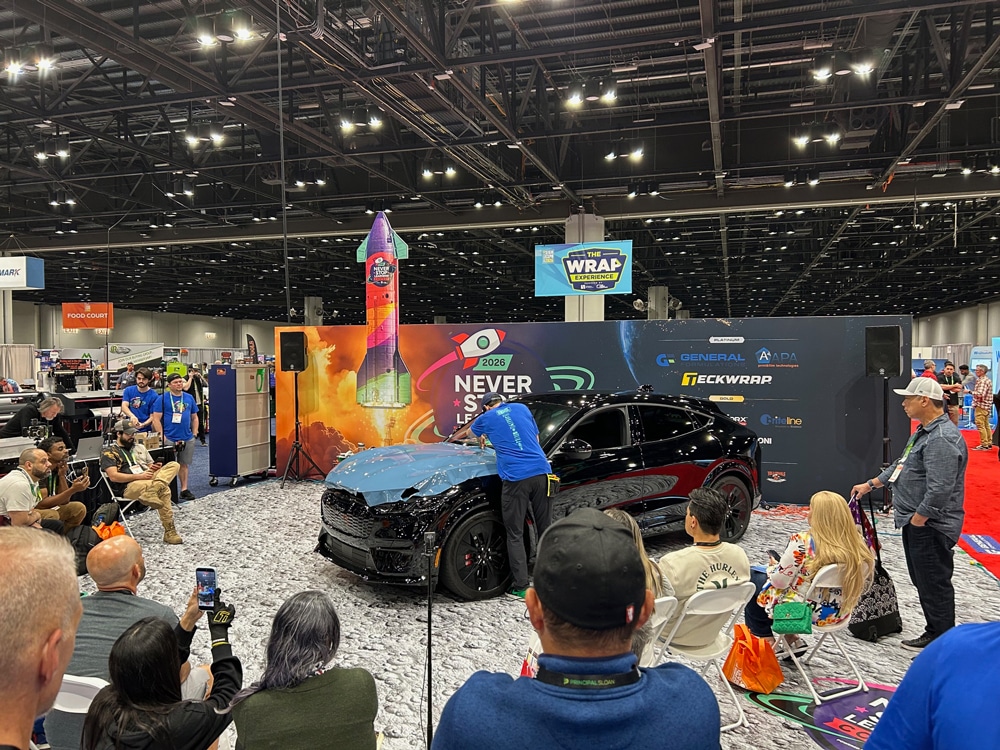 A wrap demonstration at the ISA International Sign Expo 2026 in Orlando, FL.




 Business Management2 weeks ago
 Fabrication + Installation2 weeks ago
 Real Deal7 days ago
 Benchmarks4 days ago
 Tip Sheet6 days ago
 Editor's Note1 week ago
 Maggie Harlow2 weeks ago
 News1 week ago