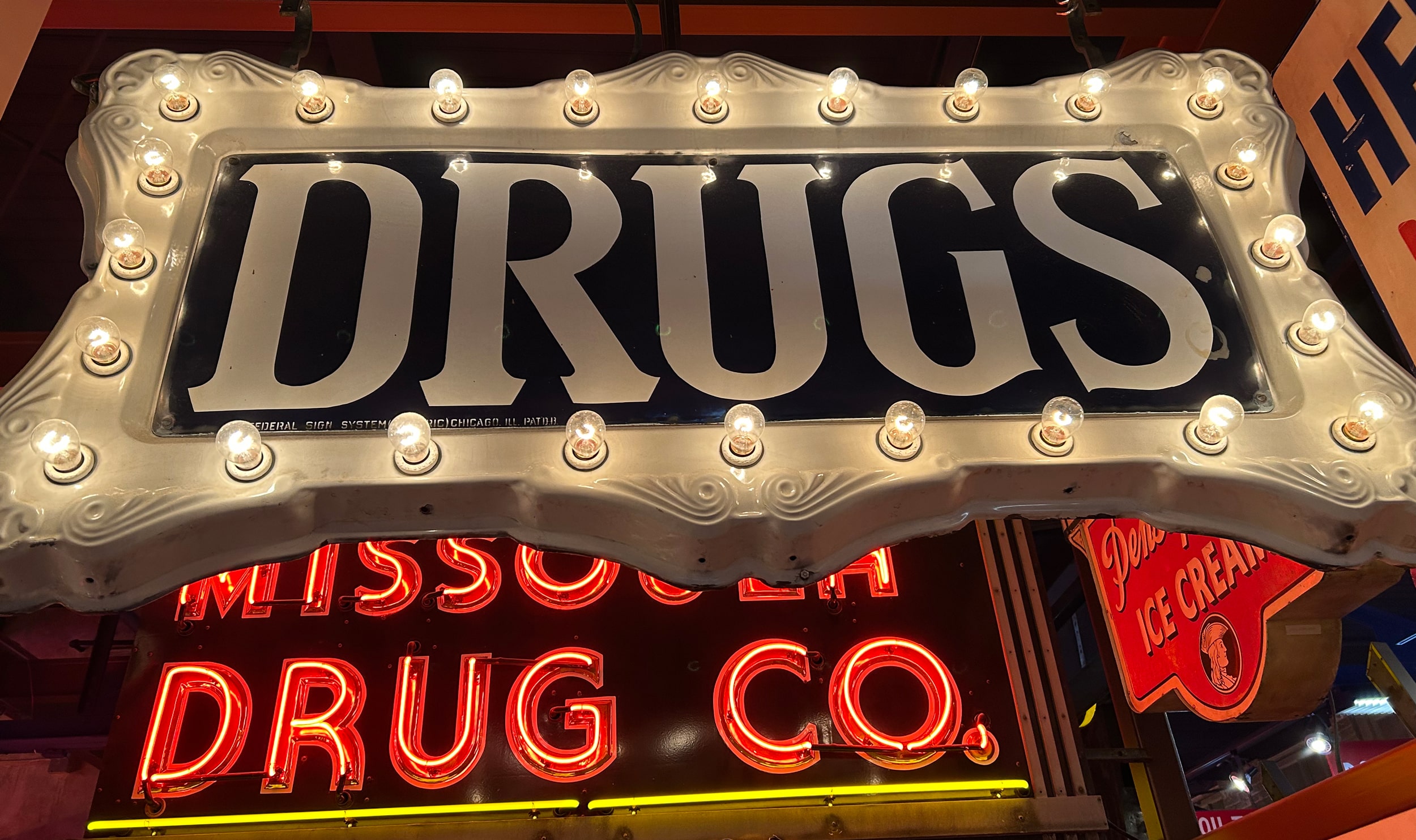
5 Industry-Changing Historic Signs and Techniques
Each represented at the American Sign Museum.

IN CELEBRATION OF Signs of the Times’ 120th anniversary, we are traveling back in time not just through the magazine’s history but also the story of signmaking itself, one of the world’s oldest trades. Former ST editor, publisher and American Sign Museum (Cincinnati) founder Tod Swormstedt provides a highly informative tour of the signs on display at the museum that exemplify some of the most significant signmaking techniques of the past century and more, which pushed the entire industry forward and led to the signs we know and love today.
EDITOR’S NOTE: This post was updated May 4, 2026. Changes were made to the Neon, Opal Glass and Vacuum Forming sections.
Plastic
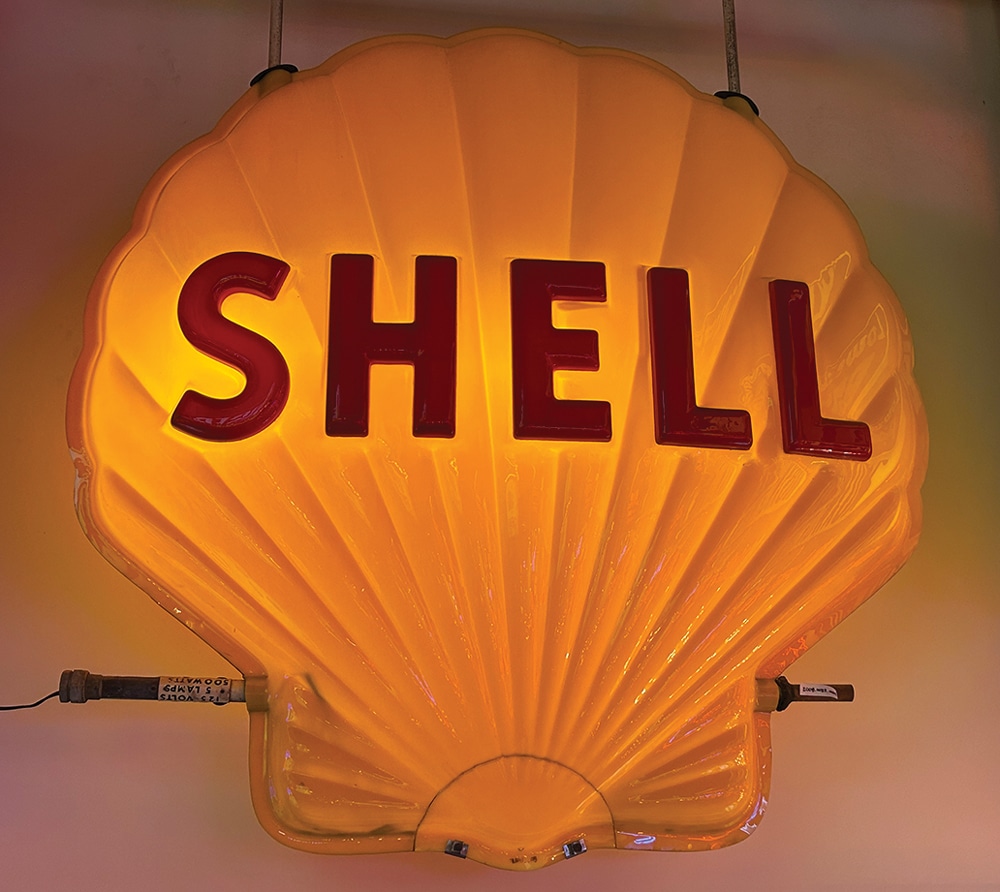
On display at the museum is one of the oldest fully plastic signs in the US, according to Swormstedt: a clamshell-shaped sign for Shell Oil Co., fabricated by Artkraft Sign Co. (Lima, OH) in 1946. The recognizable, modern-looking bright yellow-and-red sign is internally illuminated with lightbulbs as fluorescent technology was not yet used for signage at the time.
Neon
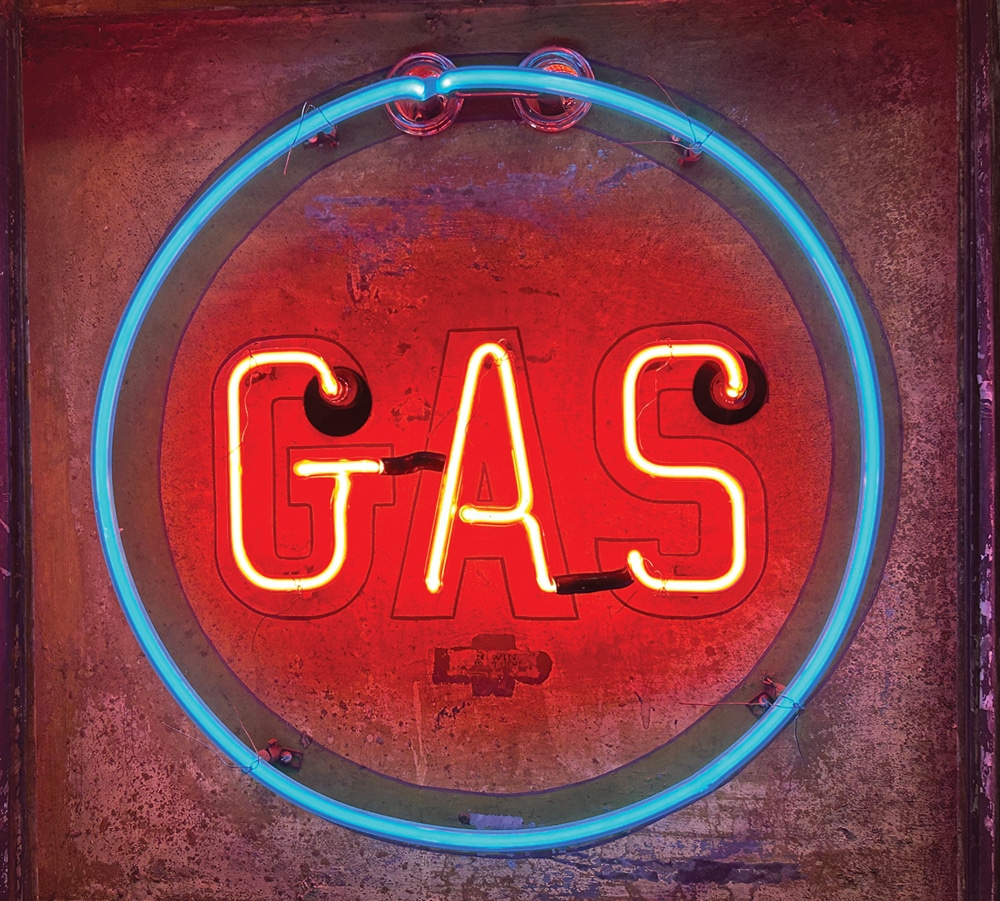
Experimentation with neon illuminated tubes had existed since before the turn of the 20th century, but they only became commercially viable in the late 1920’s after Georges Claude perfected the electrode and brought the technology to the US. This simple “GAS” neon sign, framed in a blue circle, dates back to the early 1930’s, Buffalo, NY.
Advertisement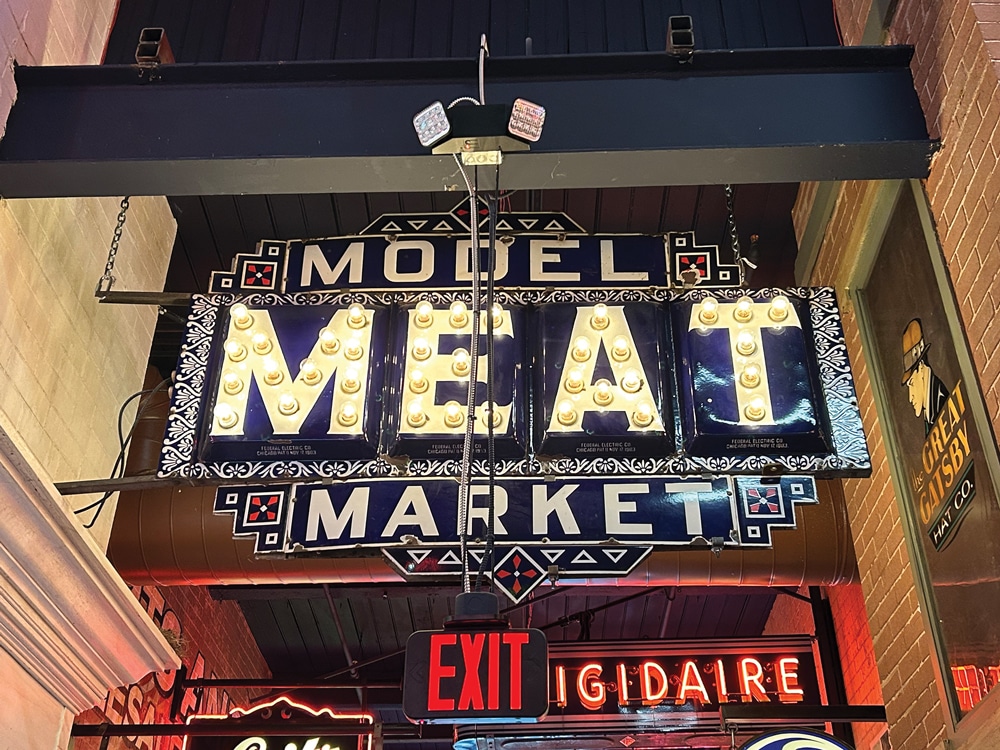
Early Electric Advertising Signs
With several representatives at the museum, one of the earliest types of electric advertising signs consists of “stock” modular letter panels and decorative components, such as corners and scrollwork, that could be assembled into different signs for different purposes. The technology and this sign were created by Federal Electric Co. (Chicago) — now Federal Heath (Hurst, TX), which celebrated its 125th anniversary in March — with a patent dating to 1903.
Opal Glass
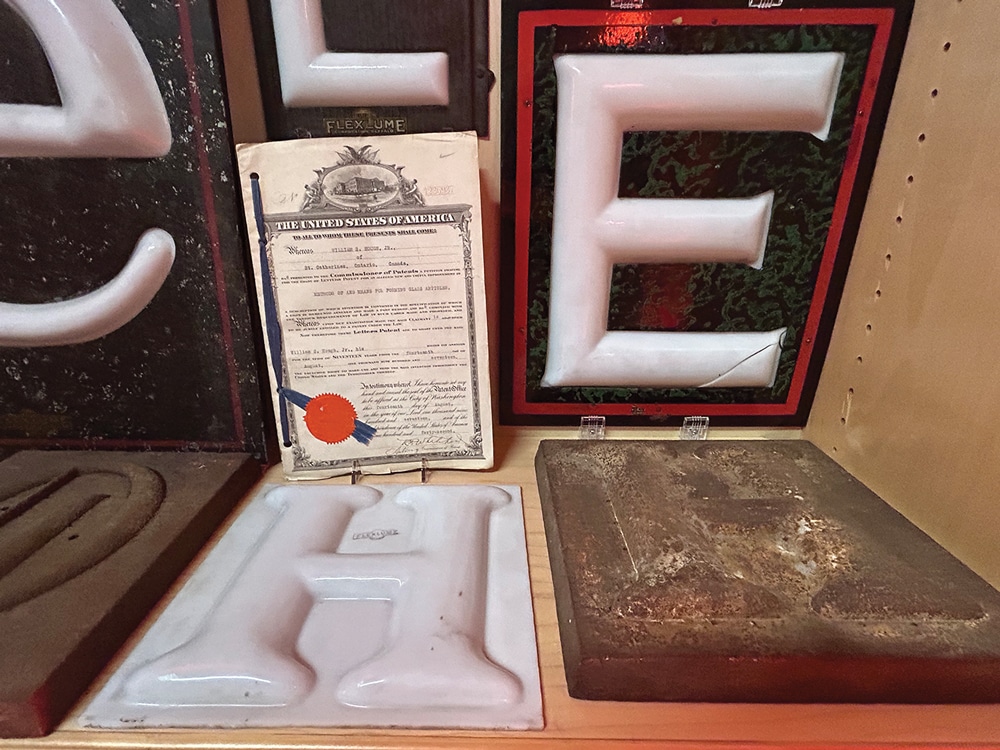
Flexlume Sign Co. (Buffalo, NY) is probably the best-known crafter of illuminated opal glass signs, with several Flexlume pieces on display at the museum dating to the 1920’s — though Swormstedt notes that a Canadian company received a patent (shown above) before Flexlume received theirs. To obtain their patent, a Flexlume representative submitted a letter along with a letter mold. All three items are now displayed together at the museum.
Vacuum Forming
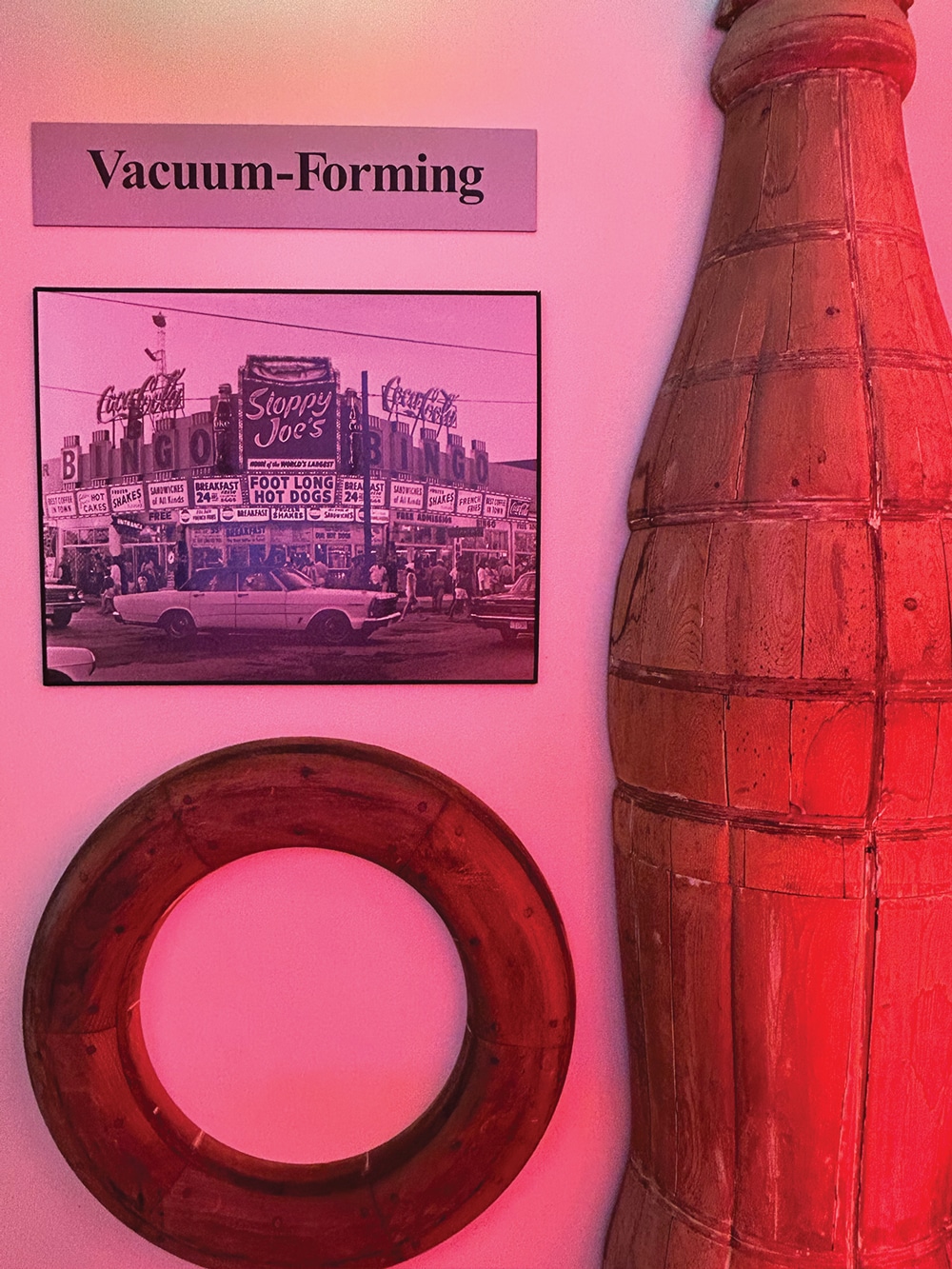
Not too long after the introduction of plastic signs in the 1940’s, vacuum forming was developed to create large-scale displays and letters formed by wooden molds, such as these on display for a giant Coca-Cola bottle and the letter ‘O’ from “Kroger,” both by Tyson Sign Co. (Myrtle Beach, SC). In the vacuum-forming process, a hinged frame containing sheeted plastic is heated, causing the plastic to soften. The frame is lowered and draped over a mold. Then a vacuum sucks the remaining air from underneath the material to pull and form the plastic tightly around the mold, Swormstedt explains.
Advertisement

Secrets of Lead Generation
Boost your sales by generating more leads! In this light and lively webinar featuring Maggie Harlow, CEO of Signarama Louisville Downtown (Louisville, KY) and the “Business of Signs” columnist for Signs of the Times, learn the secrets of how leads are generated, where they come from and how you can cultivate better (not just more) leads.





Bulletins
Get the most important news and business ideas from Signs of the Times magazine's news bulletin.
-

 Business Management2 weeks ago
Alternative Management Advice for Sign Companies
-
 Fabrication + Installation1 week ago
Small Signshop, Big Fabrication
-

 Paul Ingle2 days ago
120 Years of Signs, and I’ve Seen 41 (Mostly)
-

 Real Deal5 days ago
Sign Company and Customer Clash on “Minimum 2 Hours”
-

 Benchmarks2 days ago
5 High-Performance Vehicle Graphics Projects
-

 Tip Sheet4 days ago
Workflow Automation, Budget Discussion and More Signshop Tips
-

 True Tales2 weeks ago
My Shirt Says “Signs”
-
 Mildred Nguyen2 weeks ago
Interior Reimage Transforms Georgia School