
Monument Signs
Monument Signs With No Foundation
They avoid utilities, are faster and less expensive.

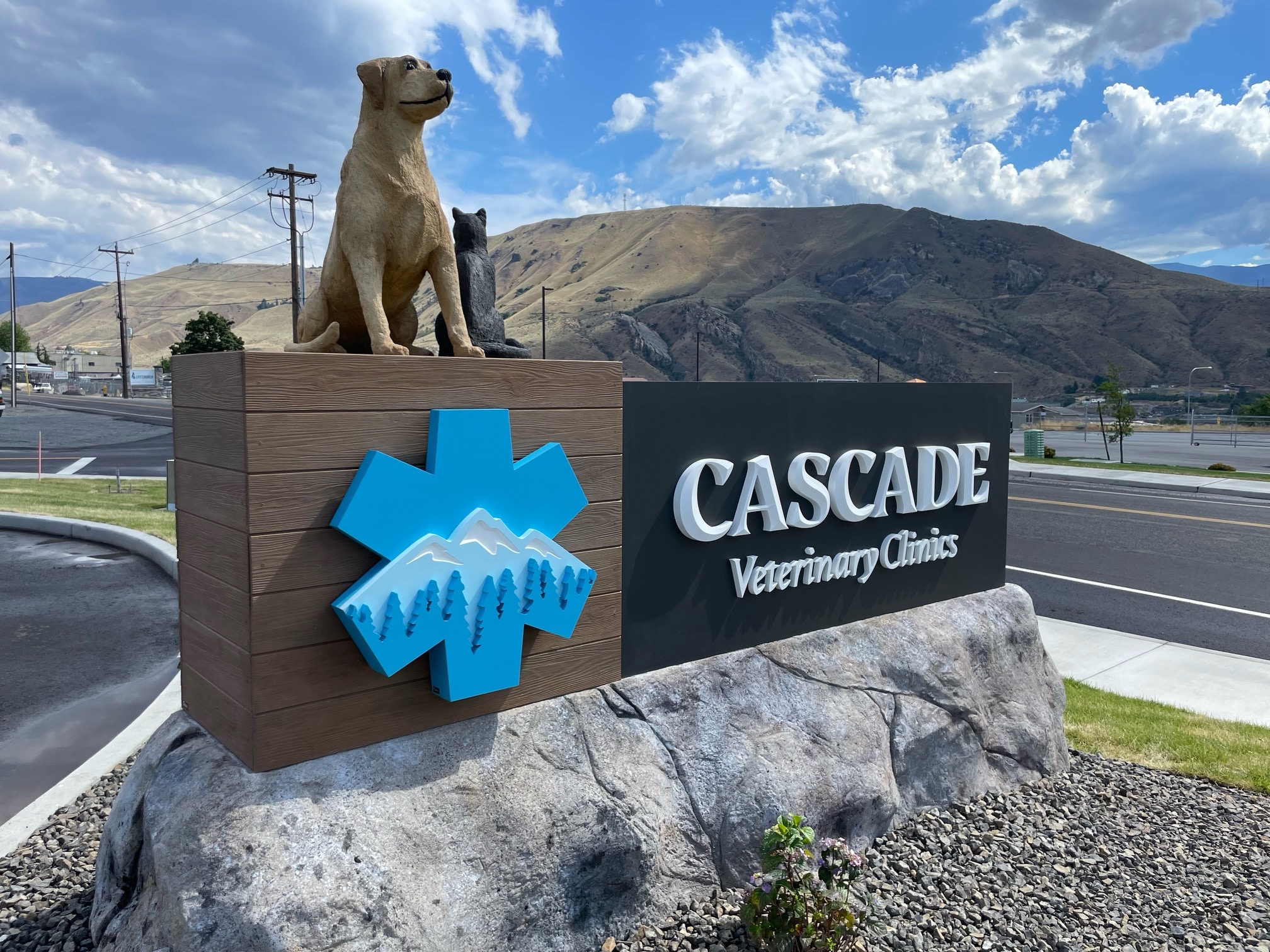 This monument sign is hollow with a steel internal structure and floats on a bed of gravel.
This article is by Rusty Gibbs, co-owner of Gibbs Graphics (Leavenworth, WA).
LATELY, WE’VE BEEN doing a lot of our monument signs with no foundation. Instead they just float on the ground. It started because of a job where we had too many underground obstacles, but we’ve continued with the method because it’s faster and lower-cost for the client. Occasionally we put treated posts in the ground but often the entire sign is floating. I’ve had a 100% success rate so far with obtaining permits (in a few different jurisdictions).
I should probably start by saying that this technique is definitely not for everyone, and many shops may never have a reason to use it. But in certain situations it can save a project entirely — especially when underground utilities, existing hardscape, irrigation or other site limitations make traditional excavation difficult or extremely expensive.
Most of the time when we use this technique, it’s for permanent commercial monument signs, but of course, the general concept would be useful for temporary or event signage as well. Structurally, the base is usually built with either a steel or aluminum armature wrapped in galvanized lath and covered with fiber-reinforced mortar. Many of them are designed to resemble carved stone or faux rock bases.
Advertisement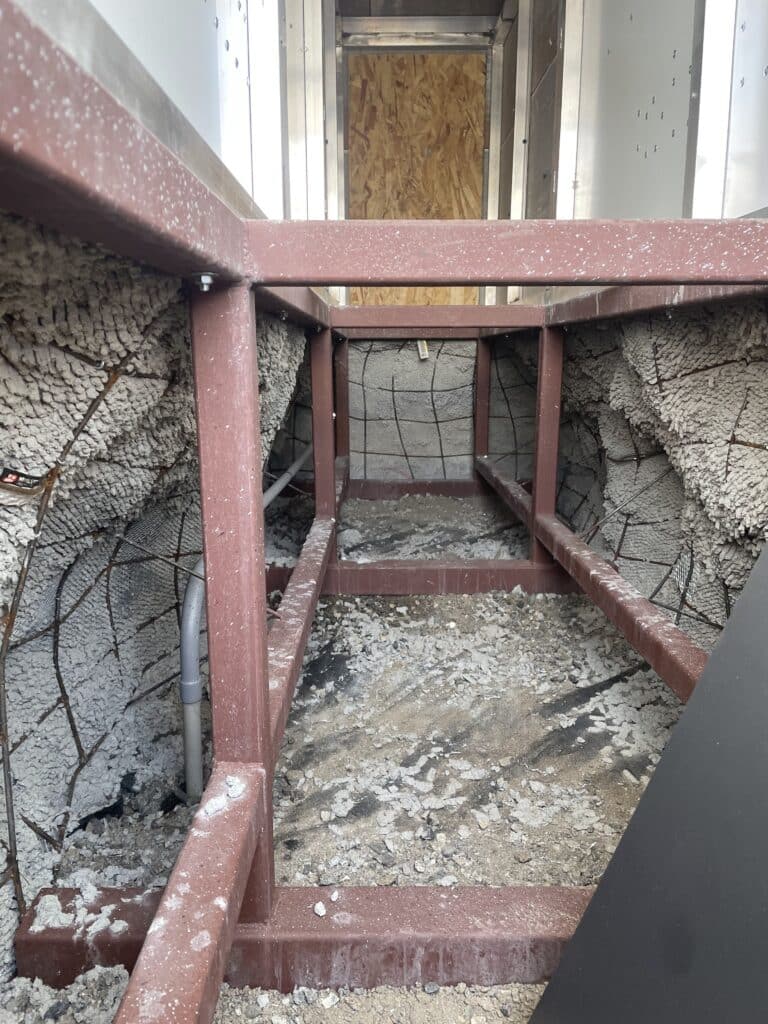
Here is the Cascade Veterinary Clinics sign showing the internal frame with a mix of steel and aluminum. The mortar work was done onsite.
Overview of the Process
Rather than relying on deep, concrete footings, when we use this method we focus on creating a sign with a broad footprint, substantial weight and a low center of gravity. Typical signs range anywhere from roughly 30 to 200 sq. ft. in footprint and may weigh between 500 and 3,000 lbs. depending on materials and size.
Usually we prepare and compact a gravel base first. From there, the support method varies depending on the site conditions. Sometimes the sign is completely free-floating. Other times we incorporate shallow hidden steel “feet” slightly below grade, use occasional treated posts, or tie into an existing footing if one is already onsite.
One method we’ve used successfully is an upside-down “T” style steel or aluminum foot beneath the sign. Two stabilized posts with wide hidden feet can support the structure well, especially when the sign itself acts as a shear panel.
Because many of our mortar-based signs are sculpted to resemble rock or masonry, we often fabricate the armature and lath in the shop, transport it in lightweight sections and complete the mortar work onsite. That avoids cranes and large equipment in many cases.
Weight Requirements, If Any
There’s no exact number for a required weight, because footprint, wind exposure, center of gravity and overall shape matter more than weight alone.
What seems to matter most are the following:
- Wide footprint
- Low center of gravity
- Minimal “sail” effect from roofs or tall vertical surfaces
- Overall rigidity of the structure
We generally avoid this method for tall, narrow or top-heavy signs.
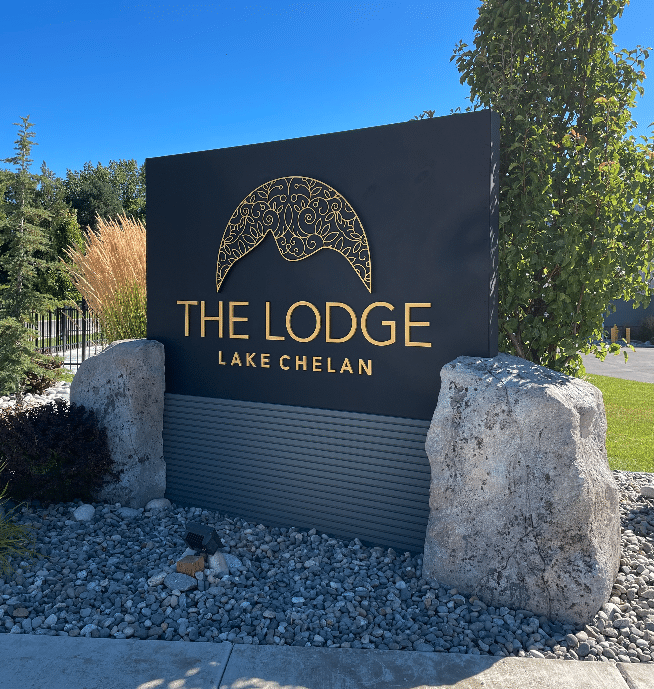
This installation only took one trip and two hours on site since there was no need to pour a concrete foundation. This foundation-less installation method is especially useful when the job is far away.
Advantages and Disadvantages
The advantages seem to be faster and less-expensive installations. Are there disadvantages?
Absolutely. This method is not appropriate for every situation.
We would generally avoid it for very tall or top-heavy structures, in soft or saturated soils or with customers who would look at us weird if we even suggested such an odd idea. 🙂
Permitting Suggestions
There’s also a level of engineering judgment involved. Even though we’ve had a 100% success rate obtaining permits so far in several jurisdictions, some reviewers understandably pause when they first hear the concept. A good relationship with local jurisdictions definitely helps.
Some permit reviewers recognize that the structures are substantially overbuilt for their size and do not require engineering stamps, while others want additional structural review. So far we’ve found that once they understand the low center of gravity and overall mass of the structures, the conversations go fairly smoothly.
Final Thoughts
One thing I’d emphasize is that this isn’t about cutting corners. In many cases, the structures themselves are actually stronger and heavier than traditional monument signs.
The main goal is avoiding unnecessary excavation, concrete work, utility conflicts and footing inspection delays.
In areas of Washington state, such as Chelan and Douglas Counties, where we often deal with a frost depth of three feet, simplifying installation can sometimes make the difference between a practical project and an impractical one.
For more information, see 14 Looks at Foundationless Monument Signs by Rusty Gibbs.
AdvertisementSecrets of Lead Generation
Boost your sales by generating more leads! In this light and lively webinar featuring Maggie Harlow, CEO of Signarama Louisville Downtown (Louisville, KY) and the “Business of Signs” columnist for Signs of the Times, learn the secrets of how leads are generated, where they come from and how you can cultivate better (not just more) leads.





Bulletins
Get the most important news and business ideas from Signs of the Times magazine's news bulletin.
-
 Buzz Session2 weeks ago
Sign Pros on Now vs. Their “Good Old Days”
-
 Jameson Parker2 weeks ago
Signshop Layout, Part 4
-

 Buzz Session2 weeks ago
These 14 Sign Pros Prefer Their Good Old Days to Now
-
 Brain Squad2 weeks ago
These 12 Sign Pros Prefer Now to Their Good Old Days
-

 Ask Signs of the Times2 weeks ago
How Soon Should Signshops Follow Up on Estimates?
-

 Ask Signs of the Times1 week ago
How Much Sign Companies Charge to Convert Logos
-

 Heidi Tillmanns7 days ago
Sign Legibility is Not a Style
-
 News2 weeks ago
New 130-ft. Marquee on Las Vegas Blvd.