Electric Signs
Know Your Production Limitations for Channel Letters
Stop the slop.

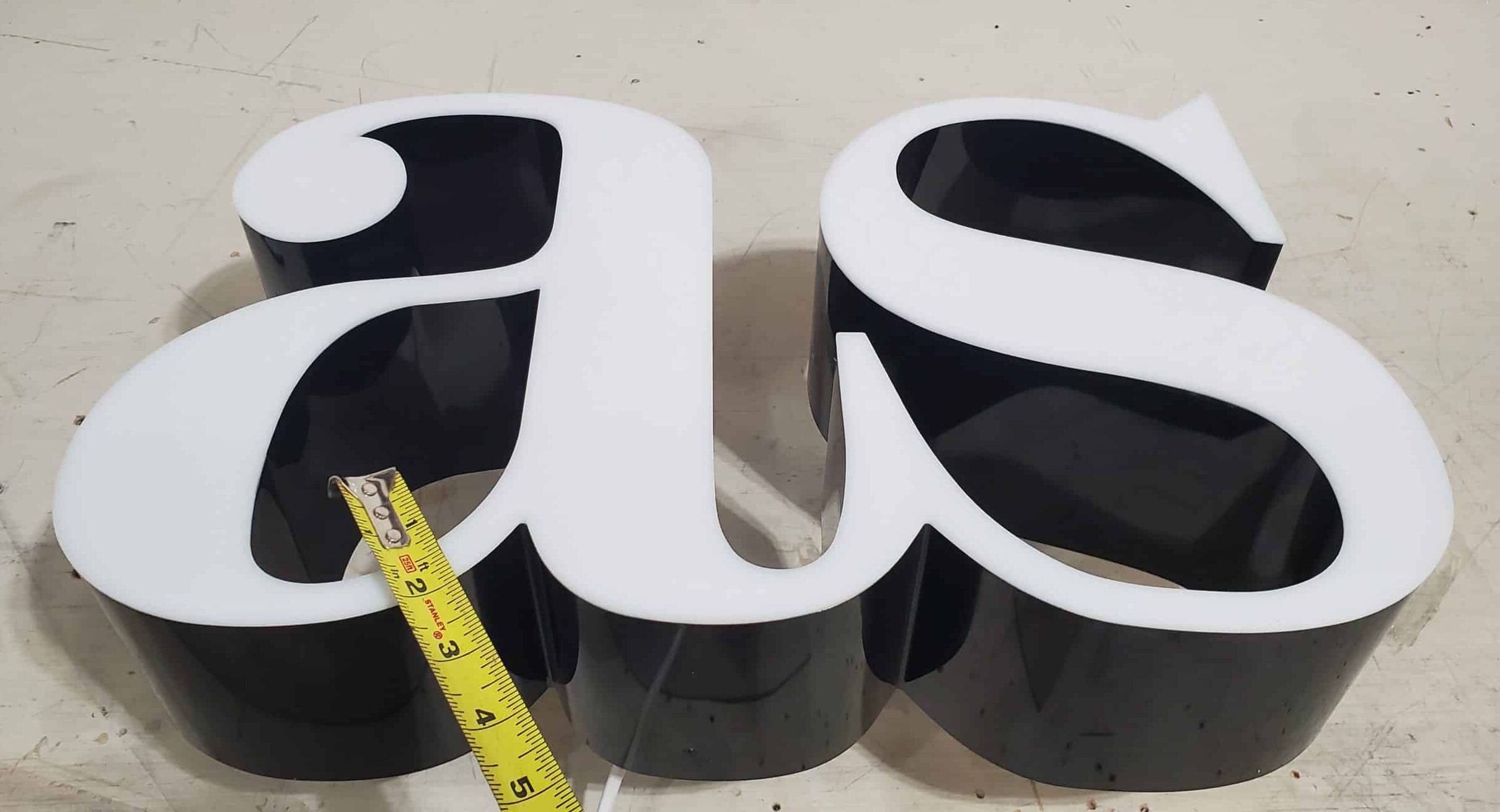 Trimless channel letter with a 1/2-in. stroke, fabricated by the author's company, Jig Sign.
I REMEMBER A TIME many years ago when a couple of friends and I stopped at the North Rim of the Grand Canyon on our way back from Zion National Park. For reasons I still can’t fully explain, I decided we should hike all the way down to the Colorado River — and back up. I managed to convince my two friends to join me.
We weren’t prepared for the 28-mile hike. No food, no money, no gear, no jackets, no plan. One of my friends had a flight out of Albuquerque the next day. Still, with the confidence of youth, we started down in shorts.
We left around 10 a.m. in 80-degree heat and didn’t return until nearly 4 a.m. the next morning — about 18 hours later — in near-freezing temperatures. Near the end, one of my friends started showing signs of hyponatremia. By God’s grace, we made it out safely.
Looking back, the obvious question is: What were you thinking?
The truth is, that same mindset shows up in business more often than we’d like to admit.
The “No Limits” Problem in Signshops
The sign industry naturally pushes boundaries. Everyone wants to stand out, which often means saying “yes” to ambitious designs. But there’s a difference between pushing limits and ignoring them.
Many shops sell projects that are impractical for their fabrication teams to execute. The result is predictable:
- The final product falls short
- The client feels misled
- Production becomes a bottleneck
- Profit disappears into labor overruns
Sometimes the team pulls it off. More often, it becomes a one-off project that consumes time, frustrates employees and disrupts workflow. Every shop has done this, but some make a habit of it.
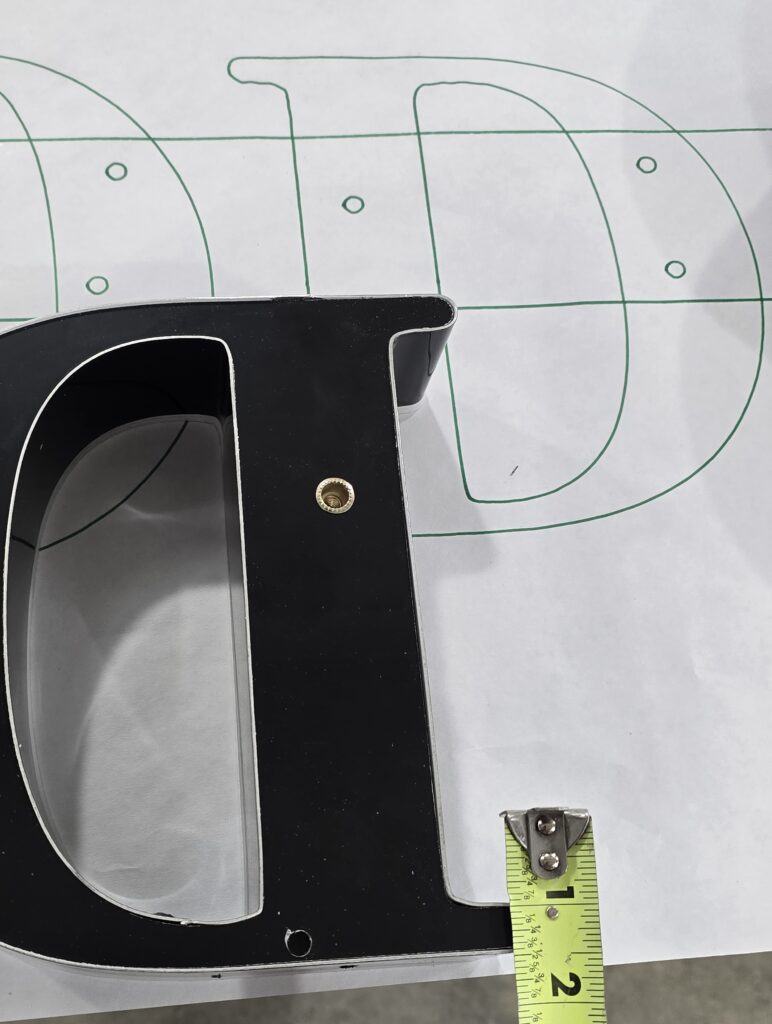
Minimum radius for serifs.
Growth Makes This Worse, Not Better
Smaller shops often have a clear sense of what they can and can’t do. As companies grow, that clarity fades.
Sales teams expand. Production managers change. New equipment is added. Somewhere between the estimate and the shop floor, reality gets lost.
What looks like a win in sales can quickly become a costly problem in production.
Define Your In-House Capabilities (Clearly and in Writing)
Every shop should clearly define fabrication limits for each style of sign — in my case, channel letters.
For each style, define:
- Recommended minimum stroke width
- Recommended letter height range
- Recommended return depth
Example: Trimless Edge Channel Letters (In-House)
Recommended:
- Depth: 3.5-4.3 in.
- Stroke: ¾ in. or larger
- Letter height: 10-48 in.
Possible with limitations:
- Depth: 2.5-10 in.
- Stroke: ¼-¾ in.
- Letter height: 3-96 in.
This creates three clear categories:
- Standard work — can be quoted confidently
- Edge cases — require review
- Outside capability — outsource or decline
Without this structure, sales teams are guessing, and production absorbs the consequences.
Note: Size is often the most important factor affecting fabrication limits, but some shops also define minimum bending radius, materials, finishes or LED constraints for each style.
Advertisement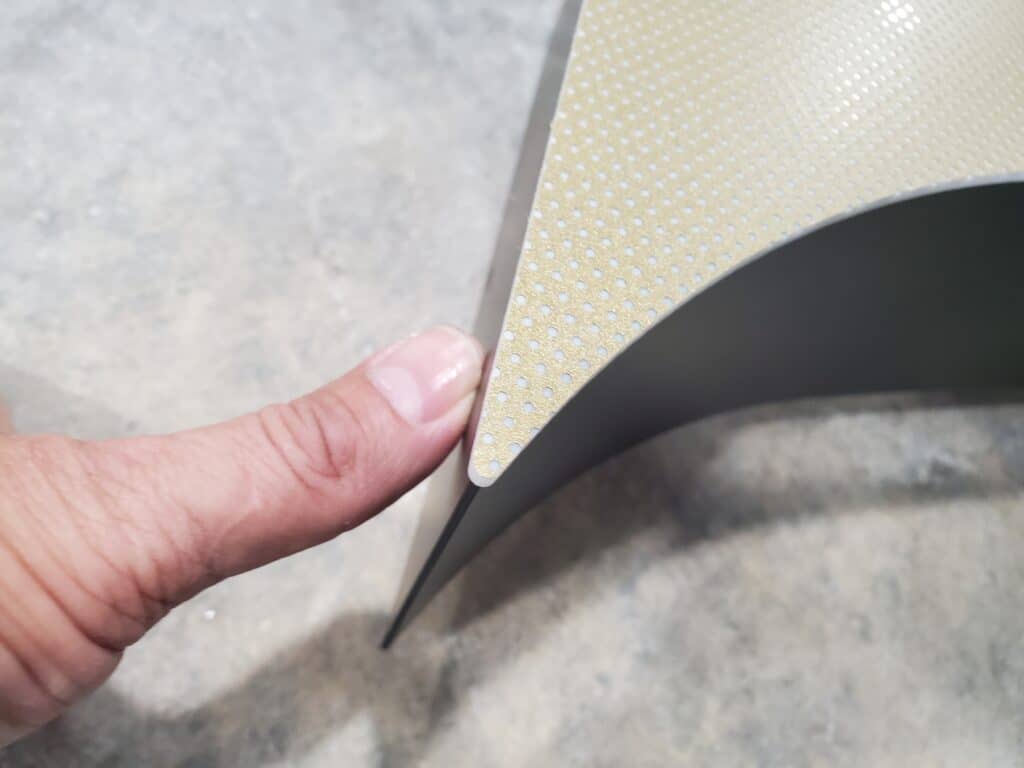
Geometry fabrication limits for sharp points.
Know When to Outsource
If a project falls outside your in-house capabilities, whether due to letter style or dimensions, you have two options: adjust the design or outsource the work.
Outsourcing is not a weakness; it’s a practical way to protect quality and maintain efficiency.
This is especially true with trimless channel letters. Tight tolerances, clean edges and consistent finishing leave little room for error. While some shops attempt to bring this work in-house, many find it more effective to partner with a fabricator that produces these letters regularly and at scale.
In our experience at Jig Sign, working as a wholesale partner to sign companies nationwide, we often see projects that began elsewhere but ultimately had to be outsourced to meet expectations.
The goal isn’t to outsource everything — it’s to outsource strategically, and to recognize those moments early rather than after production has already gone sideways.
Equipment Does Not Equal Capability
A common mistake is assuming new equipment automatically increases production capability. It doesn’t.
Channel letter fabrication depends on more than machines:
- Accurate file setup and design
- LED components
- Assembly, fixing and fastening methods
- CNC precision, tooling and operator skill
- Overall fabrication processes
Two shops with similar equipment can produce very different results. Without the right systems and people, new machines add little value. Training is expensive, and skilled operators aren’t easily replaced.
The right tools matter but the team behind them matters more. There are no shortcuts. Capability comes from skilled people and solid processes.
Trial, Error and Honest Evaluation
There’s no shortcut to improving production capability, but understanding your company’s fabrication limits is essential.
The only reliable approach involves the following:
- Test more complex projects intentionally
- Produce sample letters that push production limits
- Identify where quality drops or production slows
- Define in-house capabilities in writing
- Define which jobs should be outsourced
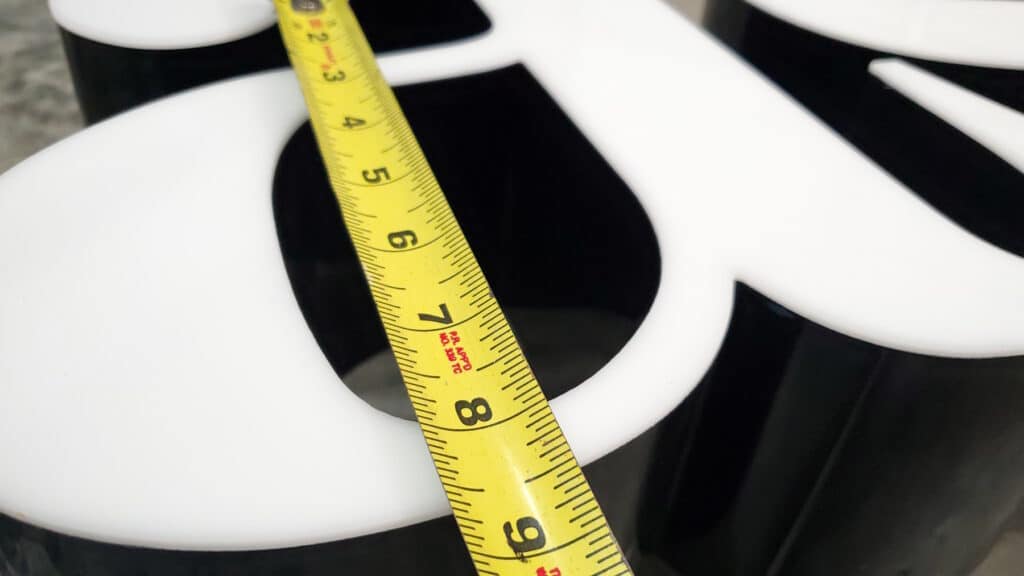
Trimless channel letters with a narrow stroke.
Stop the Slop
The worst outcome isn’t failing to produce something — it’s producing it poorly.
Pushing out subpar work to “get the job done” may solve a short-term problem, but it damages long-term trust. In channel letters, especially higher-end styles, quality is immediately visible.
If your shop can’t produce a product at a level you’re confident in, it should be outsourced to a trusted partner or not sold at all.
There will always be shops racing to the bottom. But as signmakers, we are craftspeople tasked with improving a company’s image through signage, and that cannot be done with sloppy work.
Final Thought
Every shop has limits. The successful ones are simply honest about them.
Knowing what to produce in-house, what to outsource and what to walk away from are among the most important decisions a sign company makes. Ignoring your fabrication limits doesn’t create opportunity; it creates risk.
I may have survived one foolish trip into the Grand Canyon, but it’s not something I would do again. In business, the consequences are usually less physical, but they affect the bottom line.
The lesson is the same: Just because you can attempt something doesn’t mean you should.
Know your company’s fabrication limits. Push them, but don’t go over the edge.
If you would like to discuss reasonable fabrication limits for common channel letter styles, or are looking for a trimless channel letter fabrication partner, feel free to contact me at bradley.dehaan@jigsign.com.
Advertisement

Secrets of Lead Generation
Boost your sales by generating more leads! In this light and lively webinar featuring Maggie Harlow, CEO of Signarama Louisville Downtown (Louisville, KY) and the “Business of Signs” columnist for Signs of the Times, learn the secrets of how leads are generated, where they come from and how you can cultivate better (not just more) leads.










Bulletins
Get the most important news and business ideas from Signs of the Times magazine's news bulletin.
-

 Buzz Session2 weeks ago
Sign Pros on Bidding Too High and Turning Down Projects
-

 News2 weeks ago
Dean Blazek “Follow the Signs” Book Available
-
 Dale Salamacha4 days ago
Sign Company’s Fire-Inspection Fiasco
-

 Russell Toynes6 days ago
Better Sign Design
-

 News2 weeks ago
Neon Baby Chick Sign in Petaluma, CA Restored
-

 Paul Ingle2 weeks ago
The World is Tired of Flat
-

 Education2 weeks ago
Building Signs, Building People
-

 News2 weeks ago
PRINTING United Alliance Announces 2026 Pinnacle Award Winners