Electric Signs
Trimless Channel Letters: When and When Not To Use
Comparisons to trim cap letters, advantages and disadvantages.

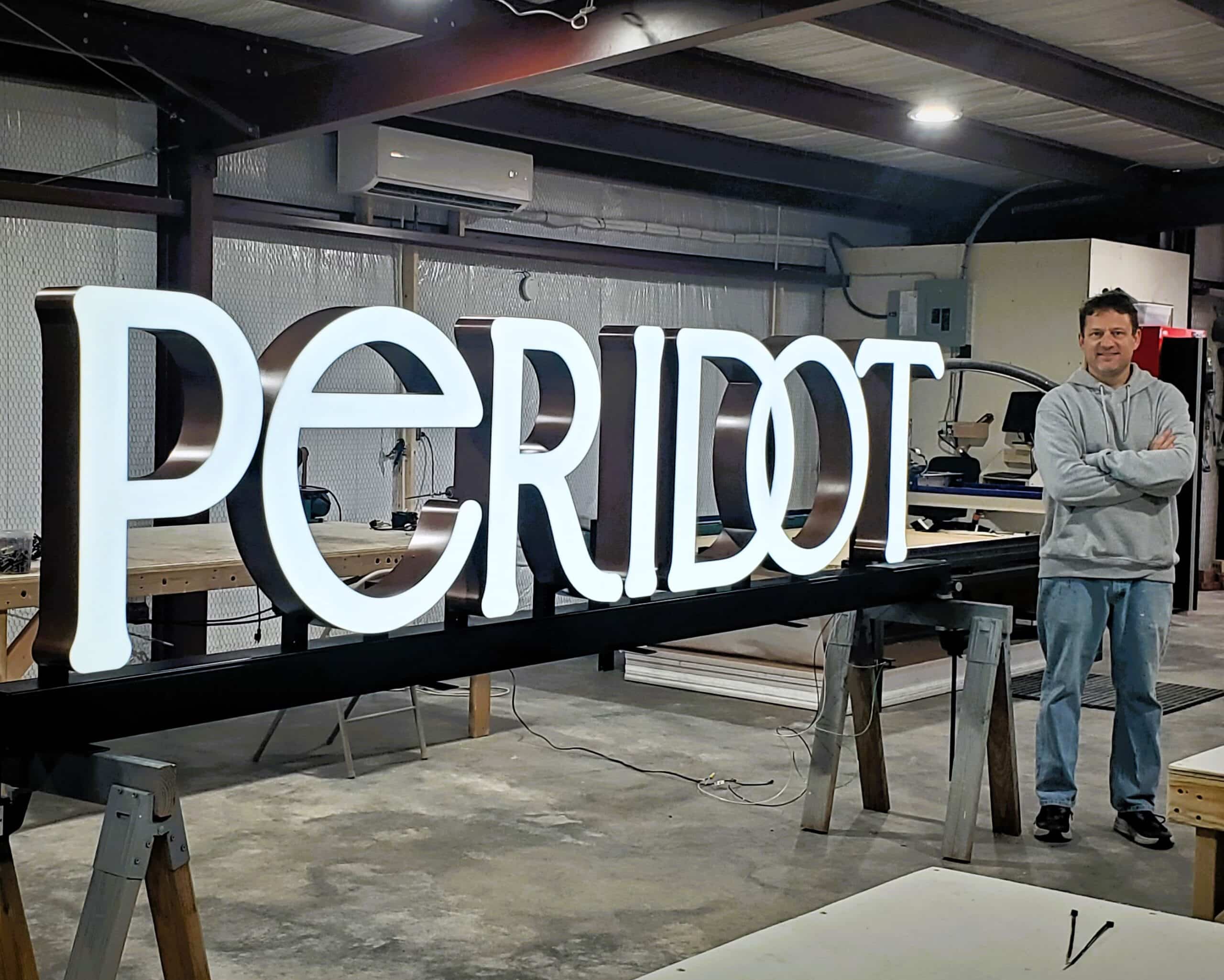
TRIMLESS CHANNEL LETTERS, as shown in the highlighted photo of the PERIDOT project above, are illuminated letters that do not use a traditional trim cap border around the outside rim. Instead of having a trim cap attaching the acrylic face to the aluminum returns, trimless channel letters are fabricated using alternative methods — most often screws and adhesives.
As they become more popular every year, understanding trimless channel letter options, as well as when to use them, will help you deliver the best product of the greatest value to your clients. Before diving into trimless channel letters, it’s helpful to first consider the challenges and advantages of traditional trim cap channel letters.
Challenges with Traditional Trim Cap Letters
- Achieving a tight fit around the letter without gaps or a wavy border.
- Difficulty painting the trim cap a custom color.
- Preventing water from being funneled down inside the face.
- Shorter longevity and higher failure rates of trim caps in outdoor environments.

Three problems common to trim cap letters.
Examples of traditional trim cap channel letters taken around my town highlight some of the challenges of trim cap, and show gaps between trim cap and return, waviness, discoloration of face in locations where trim cap funnels water inside letters, and paint peeling off trim cap.

Some trim cap connections can leave gaps.
Advantages of Traditional Trim Cap Letters
- Provides a buffer that hides many imperfections, allowing for easier manufacturing by less-experienced employees.
- Can be produced quickly and at relatively low cost, making them the “quick and easy” option.
I was first introduced to trimless channel letters during my work as an automated channel bender trainer with SDS Automation in 2012, when the company began promoting proprietary materials that simplified trimless fabrication — most notably the LetterForm return material introduced a few years later. My job was not only to train companies on operating channel letter benders but also to demonstrate the basics of assembling trimless letters.
I was struck by how trimless letters preserved the details of a design while providing a clean, solid look that seemed unmatched without a lot of the pitfalls of trim cap letters. My fascination with trimless letters — and my determination to master their fabrication — only grew. In 2017, I founded Jig Sign (Mabank, TX), a wholesale sign company specializing in trimless channel letters. We continue to meet the growing demand from sign companies looking to outsource their trimless fabrication. After years of hands-on experience, I’m still learning, but I can share a few insights on when and how to use trimless channel letters.
Three Main Categories of Trimless Channel Letters
Although many fabrication techniques exist (and more are being developed), the majority fall into three categories most often requested:
- Trimless channel letters with screw-mounted removable acrylic faces.
- Trimless channel letters with adhesive-sealed acrylic faces and removable backs.
- Other unique methods (acrylic block, 3D-printed, resin-poured faces, etc.)
A detailed comparison of every option would be too lengthy for this article, but it’s important to know that the options exist. At Jig Sign, we most often fabricate trimless channel letters with removable faces secured by screws — an approach that has received consistently positive client feedback.
Advertisement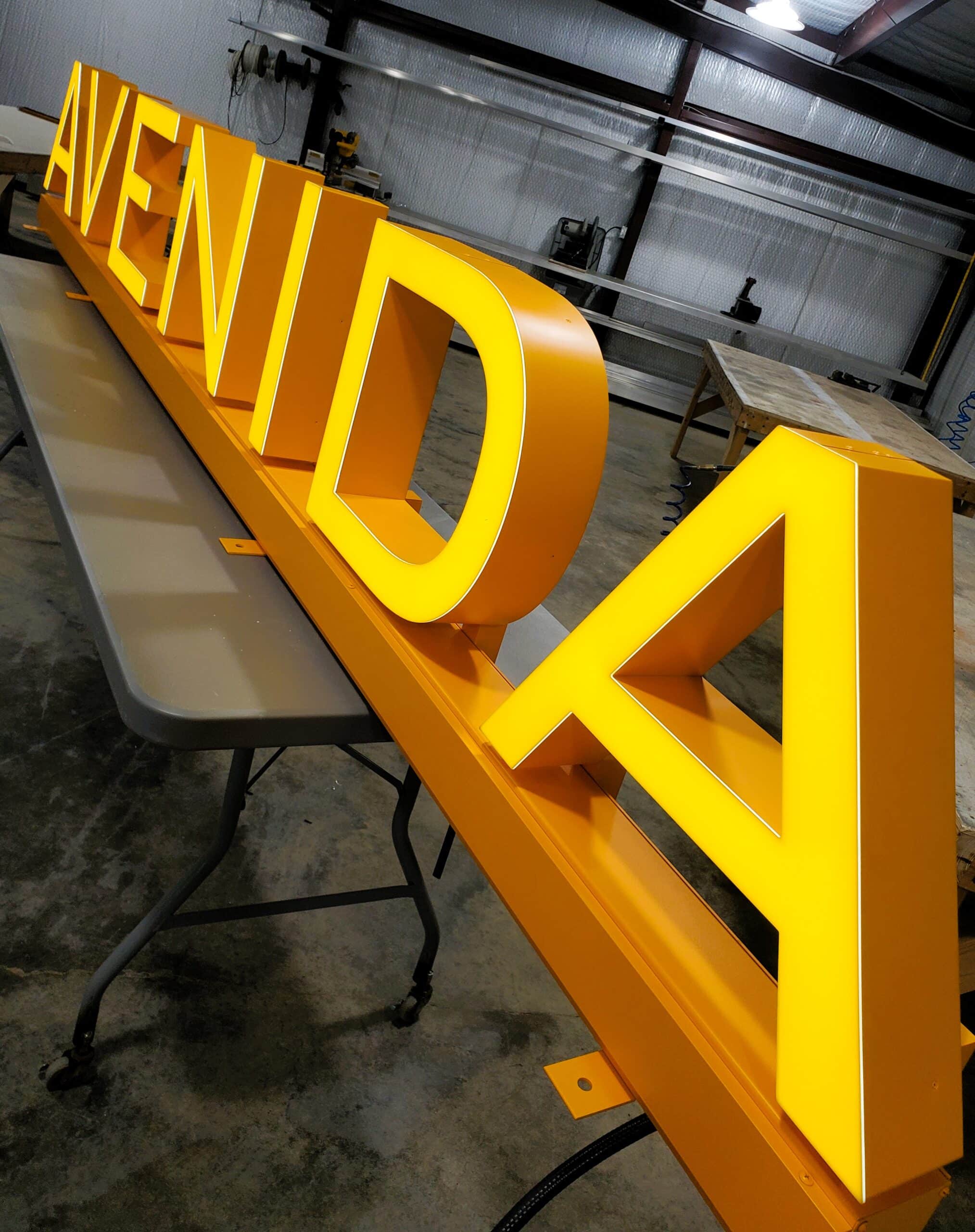
Trimless channel letters with screw-mounted removable acrylic faces.
When to Use Trimless Channel Letters
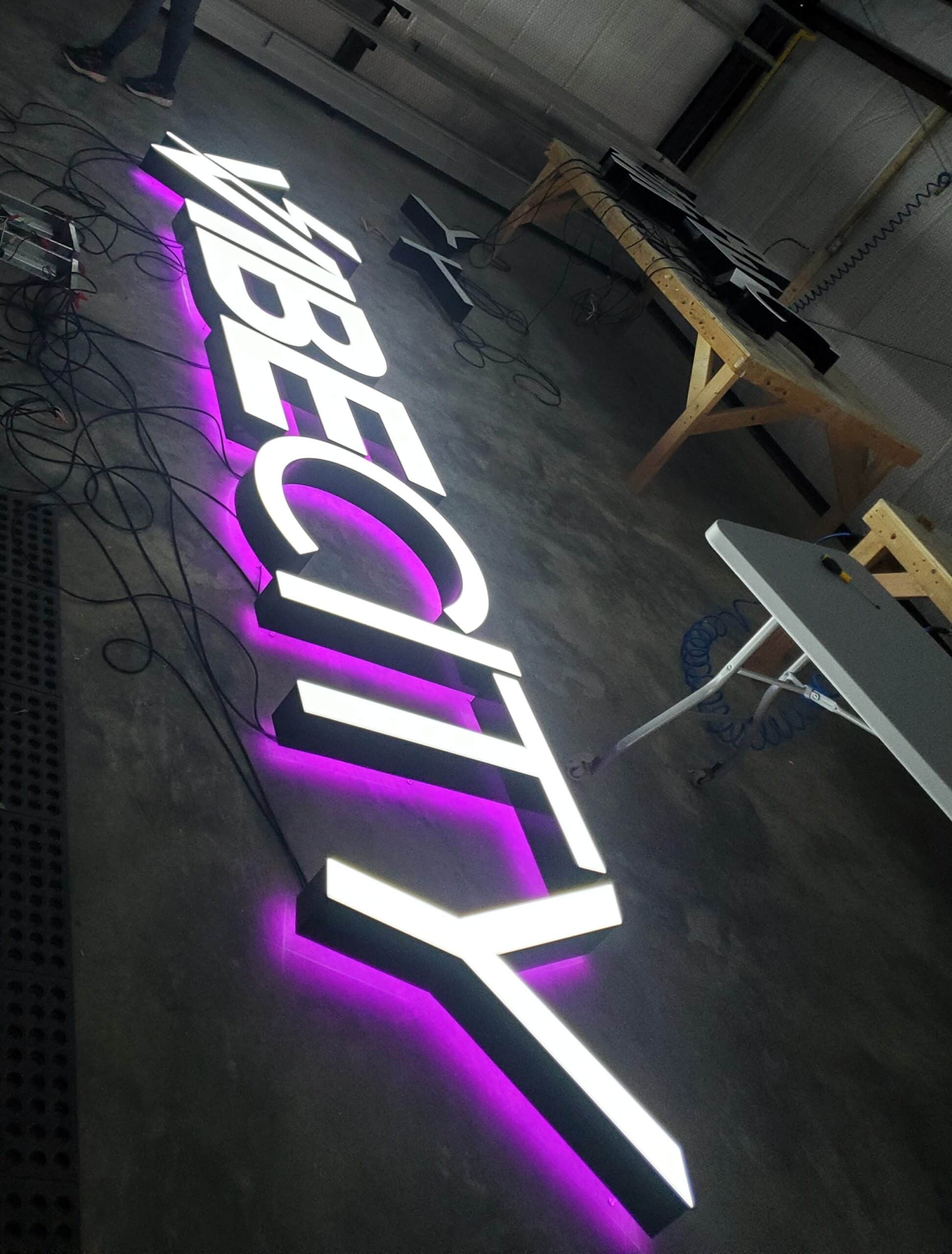
Trimless channel letters often elevate a project, especially when compared with trim cap alternatives. They are best suited for the following:
- Architectural channel letters that are face-lit (monuments, canopies, indoor spaces and high-end retail).
- Channel letters from 6 in. to 28 in. tall, particularly when viewed up close or from multiple angles.
- Brushed-metallic returns or any painted-metallic color finish.
- Signs with sharp points or fine details that need to be preserved.
When Not to Use Trimless Channel Letters
There are cases where trimless letters may not be the best choice:
- Large channel letters greater than 48 in. tall, which often require polycarbonate faces, additional internal support or metal retainers.
- Clients prioritizing the cheapest and fastest option.
- Signs where the acrylic edge must be covered (e.g., because of a vinyl print or other aesthetic requirement).
- Projects where branding guidelines specifically require a trim cap.
Closing Thoughts
I hope this article has provided you with a clearer understanding of trimless channel letters. If you would like more information, feel free to email me at [email protected] or visit our website at jigsign.com.
Advertisement

Secrets of Lead Generation
Boost your sales by generating more leads! In this light and lively webinar featuring Maggie Harlow, CEO of Signarama Louisville Downtown (Louisville, KY) and the “Business of Signs” columnist for Signs of the Times, learn the secrets of how leads are generated, where they come from and how you can cultivate better (not just more) leads.











Bulletins
Get the most important news and business ideas from Signs of the Times magazine's news bulletin.
-

 News1 week ago
2026 Sign Contest Open for Submission
-

 Benchmarks2 weeks ago
5 Industry-Changing Historic Signs and Techniques
-

 Buzz Session7 days ago
Sign Pros on Now vs. Their “Good Old Days”
-

 Tip Sheet1 week ago
Signmaking Tips for Equipment Purchases, Graphics Shipments and More
-
 Jameson Parker6 days ago
Signshop Layout, Part 4
-

 Video2 weeks ago
Paid Day Off to Find Another Job
-

 Buzz Session5 days ago
These 14 Sign Pros Prefer Their Good Old Days to Now
-

 Brain Squad6 days ago
These 12 Sign Pros Prefer Now to Their Good Old Days