THE FINISHING DEPARTMENT is always working with parts that have time and material invested into them, and often they are the second-to-last process in the production cycle. This is the most important operating reality of finishing departments, which magnifies the importance of an intentionally designed layout and optimized procedures. This month, I will focus on paint as a finishing process since most shops use it as their finishing method. In our shop the paint department is broken down into four specific areas: prep, mix/spray, stage and equipment maintenance/storage.
Prep
After signs leave the fabrication area they are staged for surface preparation. Proper surface prep is key for adequate paint adhesion and visual aesthetic. Most preparation techniques produce dust, which can be harmful to machinery, product and personnel. Thus, it is crucial that your prep area is sectioned off from the rest of your facility by full-length walls. It’s also ideal that a prep area is situated along an outside wall to vent dust out of your building easily.
Companies such as Eurovac offer stationary and portable dust-collecting solutions that work effectively with aluminum and plastic dust. These systems will keep your facility as clean as possible and your workers healthy, but it’s crucial that maintenance schedules are strictly adhered to ensure proper air quality and machine longevity.
For our prep room we use a combination/cellular layout featuring light and easily maneuverable prep tables for quick changes. Since the prep room is an enclosed space, it must be easily adaptable to small and large signs. We also want the option to adjust so that two painters can work on the same sign if necessary. The main interior wall of the prep room must have an overhead door large enough to fit any type of sign.
Advertisement
Mix/Spray
First, paint must be mixed which involves many variables including all of the paint and chemicals, the scale, containers and the computer connected to the mixing database. Our mixing room is sectioned off from the rest of the paint department and set up in a linear style to promote a natural and repeatable flow of process from start to finish. Our room relies heavily on 5S principles (Sort, Set in order, Shine, Standardize, Sustain) so that everything needed for the process has a designated place, and if we are running low on something it is visibly noticeable.
Once the paint is mixed it is time to step into the booths and spray. Our shop currently runs two large booths, roughly 25 ft. long by 15 ft. wide, and one small “desktop” booth intended for painting quick jobs that do not require a pristine finish such as hardware, mounting plates, cabinet door covers, etc. This saves us from firing up a large booth just to paint a very small part.
Stage
Painted signs are stored in our staging area until they are picked up by the final assembly team. This area is set aside from forklift traffic to protect the finished signs from accidental damage. Our staging area uses Lean Kitting principles, helping to promote consistent transfer of complete assemblies from paint to final assembly. Kitting combines various products and components, so users always have the right inventory at the right time. Set parameters for our painters are laid out in a specific set of steps to ensure kits are always complete and ready for assemblers.
Equipment Maintenance/Storage
A concise storage and tool maintenance program is crucial for every finishing department. The chemicals used in the paint process are extremely hazardous and must be stored appropriately. The paint guns and respiratory equipment are not only important, but expensive, so consistent cleaning is a must. Our storage and cleaning areas are laid out in a linear fashion with an intense focus on 5S principles much like our mixing area. This ensures steps in the cleaning process are not missed and incorrect chemical storage is easy to visually detect.
Advertisement

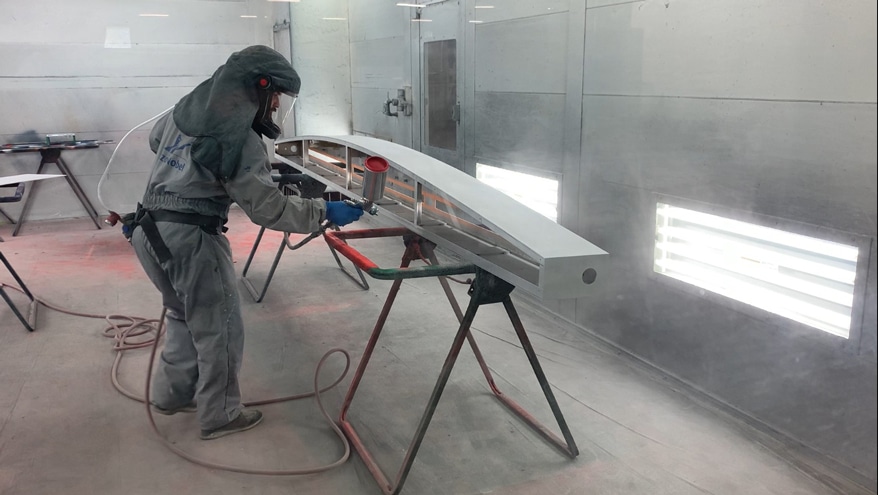 Painting in progress at North American Signs.









 News2 days ago
 Russell Toynes1 week ago
 Benchmarks6 days ago
 Monument Signs1 week ago
 Photo Gallery1 week ago
 Buzz Session2 days ago
 Video1 week ago
 Real Deal1 week ago